Petrochemicals are chemical products derived from petroleum or natural gas. There are two common classes of petrochemicals; olefins (including ethylene and propylene) and aromatics (including benzene, toluene and xylene isomers). As you may expect, the production of petrochemicals such as these poses very high risk of fire.
Petrochemicals are made on a very large scale and are predominantly produced in a handful of manufacturing plants around the world. Given the volatile nature of petrochemicals, these plants are at high risk of fire. In fact, it was reported that in 2014 one of the oldest rigs in the North Sea, Tartan Alpha, suffered a large fire that broke out in the rigs generator room, one of four fires reported on a North Sea rig that year.
Fortunately, none of the 122 crew were harmed in the fire, however, the consequences could have been disasterous. The sheer nature of the substances and their production environment signifies that more precautions are required to address fire incidents that may occur, regardless of the tight safety measures already in place.
What are the Risks?
Petrochemicals can be extremely volatile and do not always need to be close to ignition sources to ignite. Vapour released from some petrochemicals can ignite from a source that is simply nearby, causing a fire to break out. Other risks are created by extraction machinery that can generate heat from friction.
Nearby sites, such as port facilities, also need to be considered due to the potential damage that a large scale fire could cause.
One of the biggest considerations is the resources that are available from emergency services. Specialist equipment is required to manage an offshore fire and it is likely to take more time for the emergency services to reach an offshore rig than an onshore facility. Therefore, early detection of fire is vital to ensure that emergency services can be dispatched as early as possible.
The Oil and Gas Industry’s Approach
Providing a higher than satisfactory or obligatory fire detection system far outweighs the implications of a blaze. Considering the devastating effects of fire (to people, environment, assets and reputation) there is no room for accepting risk.
The cost of employing a more than satisfactory detection system absolutely outweighs the irreparable damage that could be caused. Another cost offsetting factor is the reduction in insurance premiums that will be credited by having a more than adequate system in place.
These factors alone highlight the need to have a strong detection system in place.
What are the Challenges?
There are a number of factors to consider when providing a fire detection system for a petrochemical plant:
- Voluminous areas can cause delays in smoke reaching detectors.
- External areas with high airflow can make smoke difficult to detect.
- Oil, grease and smoke can be problematic to IR detectors and cause costly false alarms.
The Solution
Combining Aspirating Smoke Detection with Video Smoke Detection can provide the ideal solution to protect a petrochemical plant from fire.
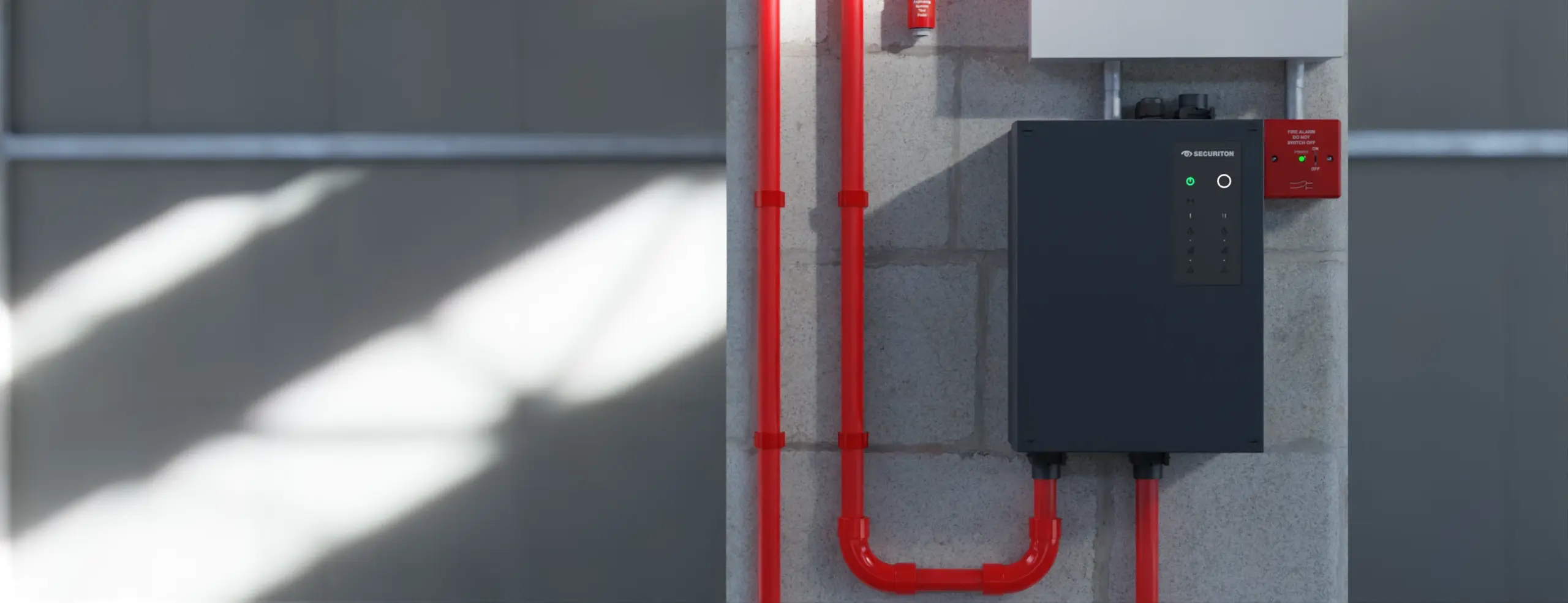
An aspirating smoke detection system such as the VESDA VLI can provide very early warning of fire by detecting particles of smoke in the air that is actively drawn into its detection chamber. ASD is highly sensitive and can easily cope with the issues presented by voluminous areas, such as smoke stratification.
A Video Smoke Detection system such as VideoFyre can also provide early warning of fire. Smoke is detected from anywhere in the camera’s field of view by using sophisticated algorithms to determine the presence of smoke. VideoFyre can also be used in outside areas, even in challenging conditions, and can be integrated with any analogue CCTV system making it highly cost-effective.
This combination of ASD and VSD allows the presence of smoke to be detected as early as possible, and, in most cases, even before the human eye. It is a cost-effective, low-maintenance solution that more than compensates for the potential devastation of fires and their consequences.
Eurofyre supply a wide range of aspirating smoke detection systems and video smoke detection systems to cater for a multitude of applications. For more information please feel free to get in touch either by telephone on +44 (0)1329 835024, email to sales@eurofyre.co.uk, or via the contact form on our contact page.